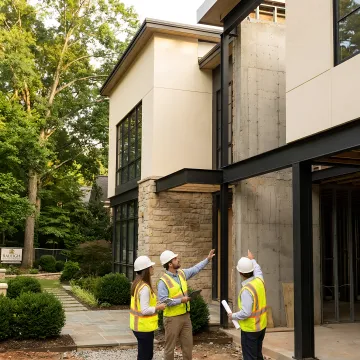
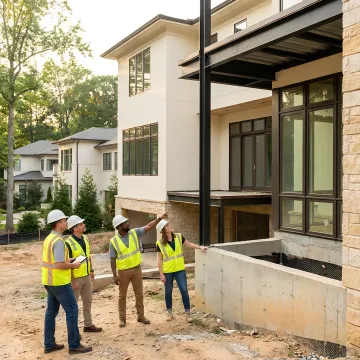
What is the difference between a contractor and a consultant?
A contractor is typically responsible for building the project and managing construction execution. A consultant works on the owner's side to review decisions, coordinate risks, evaluate team alignment, and protect the homeowner's interests. Earth'smart powered by tect does not simply focus on labor and materials; it helps connect architecture, engineering, construction strategy, manufacturer input, and long-term performance goals before problems become expensive field changes.
How can a construction consultant help my California custom home project?
A construction consultant helps California homeowners make clearer decisions before and during a custom home build. Earth'smart powered by tect can review team structure, drawings, specifications, systems, budget assumptions, and coordination gaps. This is especially useful when a project involves high-performance goals, complex building systems, fire resilience, energy performance, or multiple professionals who need to stay aligned from concept through construction.
When is the best time to bring earth'smart powered by tect into my home construction project?
The best time to bring earth'smart powered by tect in is early, before major design, engineering, product, or contractor decisions are locked. Early consulting allows better system strategy, clearer scopes, and more informed budget planning. Earth'smart powered by tect can also join later as an owner-side advisor, but late involvement may focus more on risk review, decision support, and correcting coordination gaps already embedded in the project.
Does working with earth'smart powered by tect mean replacing my existing architect or contractor?
No. In an advisory role, earth'smart powered by tect does not replace your architect, contractor, or engineer. Instead, earth'smart powered by tect works alongside the existing team as an owner-side strategic advisor. The goal is to strengthen coordination, improve system-level decisions, review documentation, and help the homeowner understand tradeoffs — a model that is useful when you like your team but want deeper construction and performance oversight.
What types of residential projects benefit most from earth'smart powered by tect's consulting services?
Earth'smart powered by tect is best suited for custom homes, major rebuilds, high-performance residences, resilient homes, and projects where the owner wants better coordination than a conventional process provides. Homes with complex mechanical systems, advanced envelopes, energy goals, long-term durability expectations, or significant budgets benefit from early advisory input because small design decisions can affect comfort, maintenance, insurance, and lifecycle cost for decades.
Can earth'smart powered by tect's consulting help control my home's budget and schedule?
Yes. While no consultant can eliminate every market or field variable, owner-side consulting can reduce preventable budget and schedule problems. Earth'smart powered by tect reviews decision timing, scope clarity, system coordination, documentation completeness, and change risks. By identifying issues earlier, homeowners are better positioned to avoid redesign loops, unclear responsibilities, incompatible systems, and costly construction-phase surprises.
How does TectApp™ manufacturer coordination improve my home construction outcome?
TectApp™ connects projects with a community of 70+ building product manufacturers across structure, envelope, roofing, mechanical, water, energy, and smart-home systems. Instead of guessing how products should work together, earth'smart powered by tect helps bring manufacturer knowledge into early planning. This can improve specification accuracy, reduce late substitutions, clarify installation requirements, and support a more integrated home performance strategy.
What should California homeowners prepare before their first discovery call with earth'smart powered by tect?
Helpful materials include your site address or general location, project goals, estimated budget range, current drawings, team contacts, schedule expectations, and any concerns about resilience, performance, permitting, or construction complexity. If you do not have drawings yet, that is fine — earth'smart powered by tect can still discuss the project vision, potential delivery paths, and where owner-side guidance may create the most value.