What is a class A rated roof in California?
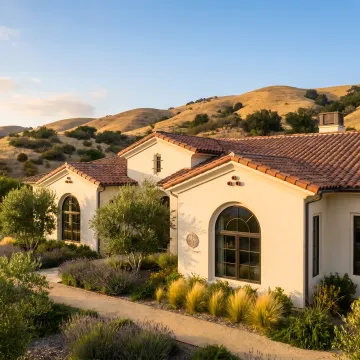
A Class A rated roof is a roof covering or assembly tested for the highest level of resistance to external fire exposure. In California, especially in Wildland-Urban Interface areas, Class A roof assemblies are commonly required or strongly recommended because they help resist flame spread, burning brands, and ember exposure when properly designed and installed as a complete system.
What is the difference between Class A and Class B roof?
Class A roofs provide the highest fire-resistance rating for roof coverings or assemblies, while Class B roofs provide a moderate level of protection. The difference is based on standardized fire testing for flame spread, intermittent flame, and burning brand exposure. In California wildfire-prone areas, Class A assemblies are often the preferred path because they offer stronger exterior fire performance.
Does a Class A roof make a home fireproof?
No roof can make a home fireproof. A Class A roof assembly improves resistance to external fire exposure, but wildfire resilience depends on the entire home and site. Roof edges, vents, gutters, wall assemblies, openings, defensible space, and ember management all matter. Earth'smart powered by tect coordinates roof strategy within the full structure, systems, and envelope approach.
Is a Class A roof assembly required in California WUI areas?
Many California WUI jurisdictions require ignition-resistant construction measures, and Class A roof assemblies are commonly part of those requirements. The exact obligation depends on the property location, local code adoption, and permit pathway. Earth'smart powered by tect supports permit strategy and coordination so roof assembly decisions are aligned early with the broader rebuild plan.
What materials can be used in a Class A roof assembly?
Class A performance can be achieved through different tested roof coverings and assemblies, including certain metal, tile, asphalt, concrete, and other approved systems. The rating depends on the complete assembly, not just the visible surface. Underlayments, decking, slopes, penetrations, and installation details must be coordinated to maintain intended performance.
How does earth'smart powered by tect coordinate roof assemblies with the rest of the home?
Earth'smart powered by tect does not treat roofing as a standalone product choice. We coordinate architecture, engineering, construction, manufacturer input, permit strategy, and resilience goals from the start. This helps the roof work with exterior walls, structural systems, energy performance, ventilation, water management, and long-term maintenance expectations for a more durable home.
Can a Class A roof help with insurance risk reduction?
A Class A roof may support a broader insurance risk reduction strategy because it documents a higher-performing exterior fire-resistance approach. However, insurers typically review many factors, including location, materials, defensible space, suppression resources, and overall construction. tect’s process helps homeowners coordinate and document resilient assemblies as part of a whole-home strategy.
Do you serve homeowners outside Northern and Southern California?
tect’s stated geographic focus includes Northern and Southern California and other high-risk wildfire areas. The best fit is typically homeowners rebuilding after wildfire, rebuilding in the WUI, or planning a long-life resilient home in a high-risk California location. A direct conversation helps determine whether the project scope and service area align.