Introduction
In wildfire-prone communities like Pacific Palisades, CAL FIRE identifies the roof as the most vulnerable part of a home — a large horizontal surface where wind-blown embers accumulate with nowhere to go. That exposure has real consequences: according to FEMA/USFA, embers cause up to 90% of home ignitions during a wildfire event, sometimes smoldering for hours before igniting a roof assembly or deck below.
Yet many homeowners researching shingles encounter terms like "Class A," "Class 4," and "Class H" and assume they measure the same thing. They don't. Each rating addresses a completely different hazard — fire, impact, and wind respectively — and confusing them leads to expensive mistakes at exactly the wrong moment.
This guide covers what Class A fire resistance actually means, how it's tested, how it compares to Class B and C, and what to evaluate when selecting Class A shingles for a resilient rebuild.
Key Takeaways
- Class A is the highest fire resistance rating for roofing, governed by UL 790 and ASTM E108 — entirely separate from impact (Class 1–4) or wind resistance ratings
- Most fiberglass asphalt shingles carry a Class A fire rating; organic shingles and untreated wood shakes often do not
- California's Title 24 legally requires Class A roofing in Very High Fire Hazard Severity Zones — compliance is a legal minimum, not an optional upgrade
- The rating must apply to the complete roof assembly (deck, underlayment, shingles), not just the shingle product
- For WUI homeowners, Class A is the starting point — how the full assembly is built determines whether it holds up in an actual fire
What Are Class A Roof Shingles?
Class A is a fire resistance classification — the highest of three tiers (A, B, C) used to rate how well a roofing material resists ignition and limits flame spread when exposed to an external fire source. Under ASTM E108, Class A is defined as effective against severe fire exposure and affording a high degree of protection to the roof deck.
That rating covers fire behavior only. Class A, B, and C say nothing about:
- UL 2218: impact resistance (Classes 1–4, covering hail and debris)
- ASTM D3161/D7158: wind resistance
A single shingle product can carry multiple independent ratings. A Class A fire rating alongside a Class 4 impact rating is a common combination, and the ratings are evaluated through completely separate testing protocols.
Which Materials Typically Achieve Class A?
CAL FIRE identifies the most common Class A roof coverings as:
- Fiberglass-mat asphalt shingles (both 3-tab and architectural/laminated)
- Clay and concrete tile
- Metal roofing panels
- Cement shingles
- Wood shingles with factory-applied fire-retardant treatment (not untreated)
Organic mat asphalt shingles and untreated wood shakes typically achieve only Class C, or carry no rating at all. California Health and Safety Code Section 13132.7 prohibits selling or applying wood shingles or shakes unless they meet the minimum required fire-retardant classification for the applicable area.
Assembly vs. Product Rating
This distinction matters more than most homeowners realize. A Class A rating can apply to a shingle product individually or to a complete roof assembly. The ICC defines a roof assembly as the deck, substrate or thermal barrier, insulation, vapor retarder, and roof covering — all of it together.
A Class A shingle installed over combustible decking without a compliant underlayment can lose its Class A performance in practice. GAF's UL Evaluation Report for its Timberline series explicitly ties the Class A classification to specified installation conditions, including deck and underlayment requirements. Before purchasing, verify what deck type, underlayment, and installation method are required to maintain the rated assembly — not just the product's standalone listing.
How Class A Fire Ratings Are Tested
Class A ratings are assigned through standardized testing under UL 790 (Standard Test Methods for Fire Tests of Roof Coverings) or ASTM E108. The ICC accepts both as equivalent; shingle packaging or manufacturer documentation should state which standard was used.
These tests simulate external fire exposure — burning embers, radiant heat, and direct flame contact — the actual conditions a roof faces during a wildfire event.
Spread of Flame Test
The test directs a gas burner at the shingle surface while controlled airflow fans the flame. For Class A and B assemblies, the exposure lasts 10 minutes (compared to 4 minutes for Class C). The test measures how far flame travels across the surface. Class A shingles must confine flame spread within defined boundaries under these severe conditions.
Burning Brand Test
Testers place a burning brand — simulating a wind-driven ember — on the shingle sample while airflow fans it. Class A and B tests use dry Douglas fir brands; Class C tests use white pine. The shingle must resist ignition and prevent the brand from burning through to the deck below. This test is required when a roof covering is not restricted to noncombustible decks.
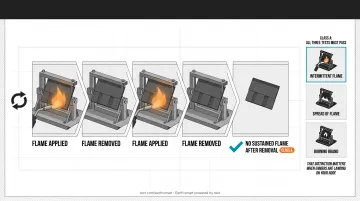
Intermittent Flame Test
A gas flame is applied and removed repeatedly, simulating the on-and-off flame exposure of a moving wildfire front. Class A shingles must not sustain flaming after the ignition source is removed.
Together, these three tests define the most severe external fire conditions a roofing material is expected to survive. A Class A rating means a shingle passed all three — and that distinction matters when embers are landing on your roof.
Class A vs. Class B vs. Class C: What the Difference Means for Your Home
| Rating | Fire Exposure Level | Protection Level |
|---|---|---|
| Class A | Severe | High degree of protection to the roof deck |
| Class B | Moderate | Moderate protection |
| Class C | Light | Minimal protection |
| Unrated | None tested | No fire resistance classification |
Class C covers small, slow-spreading surface fires. Class A is rated for sustained ember showers and direct flame contact. Wildfire conditions in WUI communities fall squarely in Class A territory — and that gap in performance has real consequences when a fire approaches.
Material Breakdown by Class
- Class A: Fiberglass asphalt shingles, metal roofing, clay/concrete tile, treated wood with factory fire-retardant treatment
- Class B: Site-applied fire-retardant treated wood shingles (some configurations), certain composite shingles
- Class C: Organic asphalt shingles, pressure-treated wood shingles in some configurations
- Unrated: Untreated wood shakes and shingles — prohibited by code in many California fire zones
Building Code Implications
Class A is the legal floor in many Southern California jurisdictions — not an upgrade. Applicable code requirements include:
- California Title 24 (CBC Chapter 7A): Mandates Class A roofing in designated WUI zones and Very High Fire Hazard Severity Zones
- 2024 IWUIC: Requires Class A assemblies tested to ASTM E108 or UL 790
- LA County April 2025 rebuild checklist: Identifies Class A roof coverings as the performance baseline for Palisades and Eaton fire pre-approved standard plans
In these jurisdictions, Class B or Class C materials are not code-compliant.
What to Consider When Selecting Class A Shingles
The Class A label is a starting point, not a finish line. Not all Class A-rated products perform equally under real conditions, and the selection process involves several factors that go beyond what's printed on the packaging.
Local Code and WUI Requirements
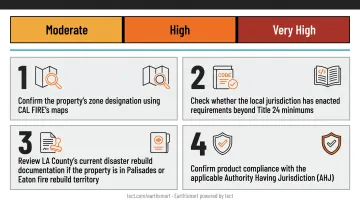
Before purchasing any product, verify the specific fire hazard severity zone designation for the property. CAL FIRE's OSFM Fire Hazard Severity Zone maps classify California areas as Moderate, High, or Very High.
Key verification steps:
- Confirm the property's zone designation using CAL FIRE's maps
- Check whether the local jurisdiction has enacted requirements beyond Title 24 minimums
- Review LA County's current disaster rebuild documentation if the property is in Palisades or Eaton fire rebuild territory
- Confirm product compliance with the applicable Authority Having Jurisdiction (AHJ)
System-Level Fire Resistance
The fire rating of the complete roof assembly must achieve Class A — not just the shingle. The deck material, underlayment, and ventilation configuration all factor into whether the assembly meets the standard as installed.
This is where fragmented purchasing decisions create real risk. Selecting a shingle from one source, underlayment from another, and relying on a contractor to sort out compatibility introduces gaps that may not surface until a code inspection or, worse, an actual fire event.
Earth'smart powered by tect addresses this through the earth'smart powered by tectApp community of 70+ building product manufacturers. The shingle, underlayment, deck system, and ventilation are evaluated together from the start — the coordinated system approach used in high-performance commercial construction, now applied to residential rebuilds in Pacific Palisades and surrounding WUI communities.
Combining Fire and Impact Ratings
Southern California homeowners face both wildfire and severe storm risk. Dual-rated products — Class A fire resistance and UL 2218 Class 4 impact resistance — exist and are worth evaluating. Verified examples include:
- GAF Timberline AS II — Class A fire + UL 2218 Class 4 impact
- Owens Corning TruDefinition Duration FLEX — Class A fire + UL 2218 Class 4 impact
- CertainTeed Landmark ClimateFlex — Class A fire + UL 2218 Class 4 impact
These ratings are independently tested and don't affect each other. Dual-rated products are often eligible for insurance premium discounts under California's Safer from Wildfires framework.
Insurance and Long-Term Cost Implications
The California Department of Insurance lists a Class A fire-rated roof as one of the qualifying actions under its Safer from Wildfires program, which requires insurers to offer discounts for documented wildfire mitigation measures. CDI confirmed in its 2023 FAQ that insurance companies are required to give discounts to residential policyholders who meet Safer from Wildfires criteria (though discount amounts vary by carrier).
The broader insurance picture in WUI markets is worth understanding:
- CDI data shows nonrenewals in wildfire-prone areas increased 211% from 2015 to 2021
- California has enacted a mandatory one-year moratorium on insurer nonrenewals in protected ZIP codes after declared wildfire emergencies
- Some carriers are treating roofing standards as underwriting factors, not just discount triggers
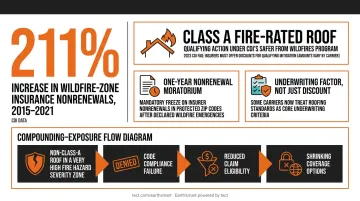
A non-Class-A roof in a Very High Fire Hazard Severity Zone creates compounding exposure: code compliance failures, reduced claim eligibility, and shrinking coverage options in future renewal cycles.
Manufacturer Certification and Warranty Alignment
Never assume a Class A rating; verify it. The rating must be tested and certified for the specific shingle SKU, not inherited from a product family or brand name.
Before finalizing any product:
- Confirm the UL or ASTM listing in manufacturer documentation
- Verify the listing applies to the specific SKU, not just the product line
- Review whether the warranty covers fire-related performance conditions
- Check that the installation requirements in the listing match what's being planned (deck type, underlayment, fastening pattern)
Higher-tier architectural shingles often carry longer warranties alongside Class A certification, but the specific warranty language — what's covered, under what conditions, and for how long — matters more than the headline duration figure.
How earth'smart powered by tect Can Help
Selecting a Class A shingle is one decision within a larger set of coordinated choices — and for homeowners rebuilding in Pacific Palisades and surrounding WUI communities, getting those choices right the first time matters financially and structurally.
Most homeowners can source a Class A shingle without much difficulty. The harder problem is ensuring the shingle, underlayment, deck, and ventilation system work together as a compliant, high-performance assembly — with those decisions made early enough to avoid expensive rework or code corrections later.
Earth'smart powered by tect's model is built around that problem. Through the earth'smart powered by tectApp community of 70+ building product manufacturers, earth'smart powered by tect brings direct manufacturer input into the design process before components are specified — while there's still time to make the right call. Architecture, engineering, construction, and product coordination move as one aligned team, from concept through completion.
Key elements of that coordination include:
- Manufacturer input on shingle, underlayment, and deck compatibility before materials are ordered
- Assembly-level compliance review against California WUI and local fire codes
- Ventilation and system integration addressed during design, not during construction
- A single aligned team across architecture, engineering, and construction
That level of coordination has historically been reserved for complex commercial projects. Earth'smart powered by tect makes it available for residential rebuilds — designed for homeowners pursuing a permanent upgrade, not a like-for-like replacement. A home built to perform under fire, flood, and earthquake exposure, with every system understood and integrated from the start.
To discuss a rebuild in Pacific Palisades or a surrounding WUI community, contact Bob Habian, AIA at (310) 913-5000 or bob@tect.com.
Frequently Asked Questions
What are Class A roof shingles?
Class A is the highest fire resistance rating for roofing materials, assigned under UL 790 or ASTM E108 standards. It indicates the shingle or roof assembly can withstand severe external fire exposure — including ember showers and direct flame contact — and provides strong protection for the roof deck.
How do Class A shingles differ from Class B and Class C shingles?
The three classes represent descending levels of fire resistance: Class A against severe exposure, Class B against moderate, and Class C against light. In WUI wildfire conditions — where ember showers and sustained flame contact are the norm — Class C performance is insufficient, and Class B often falls short of code requirements in high-risk zones.
Are Class A shingles required by law in California fire zones?
Yes. California's Title 24 (CBC Chapter 7A) mandates Class A roofing in Very High Fire Hazard Severity Zones and WUI-designated areas. In those jurisdictions, Class A is a legal baseline for new construction and rebuilds. Compliance is required, not optional.
Does a Class A shingle rating apply to the shingle alone or the entire roof system?
A Class A rating can apply to a shingle product individually or to a tested roof assembly. For code compliance, the assembly rating is what matters. The deck, underlayment, and shingle must collectively meet Class A as installed. A compliant shingle placed over a non-compliant assembly does not produce a Class A roof.
Can a shingle be both Class A fire-rated and Class 4 impact-rated?
Yes. These are independent rating systems tested under different standards (UL 790/ASTM E108 for fire; UL 2218 for impact). Dual-rated products like the GAF Timberline AS II, Owens Corning Duration FLEX, and CertainTeed Landmark ClimateFlex carry both ratings and often qualify for insurance discounts.
Do Class A shingles affect homeowners insurance in fire-prone areas?
California's Safer from Wildfires program requires insurers to offer discounts for Class A fire-rated roofs, among other mitigation measures. In some WUI markets, roofing standards are increasingly factored into underwriting decisions, beyond discount eligibility alone. Homeowners should verify current carrier requirements before finalizing roofing selections in high-risk zones.