Design-build is widely discussed as the fix. But most homeowners don't realize there's a meaningful difference between contractor-led design-build and architect-led design-build — and that difference determines whether your home actually performs the way it was intended.
This article explains what architect-led design-build means, what advantages it delivers in practice, and how the process works from concept through construction. For homeowners rebuilding after wildfire or building in high-risk areas, the stakes of getting this right are higher than most.
Key Takeaways
- The licensed architect leads both design and construction — not just the drawings
- One coordinated team means no gaps, no blame-shifting, no handoff failures
- Budget conversations happen at the start of design, not at bid time
- Structure, envelope, and mechanical systems are designed together from the start
- For WUI homeowners rebuilding after wildfire, this model brings the right expertise together before a single decision is locked in
What Is Architect-Led Design-Build?
DBIA defines design-build as a method where one entity enters a single contract with the owner to provide both design and construction services. That single point of responsibility is the core distinction from traditional delivery. But within design-build, there's a split that DBIA doesn't always emphasize: who leads.
In contractor-led design-build, the builder holds the prime contract and retains the architect as a subcontractor. Design decisions get filtered through a lens of construction efficiency and scheduling. The architect works for the builder, not for you.
In architect-led design-build (ALDB), the architect or architect-led entity holds the prime contract and organizes construction through a builder or joint venture structure. Design authority stays with the architect throughout.
Traditional design-bid-build works differently. The architect designs the project, then steps back. Contractors bid, one wins, and construction proceeds — often with the architect in a limited observation role, no longer empowered to enforce the design. Those communication gaps are built into the model.
The three models side by side:
| Delivery Model | Who Leads | Architect's Role in Construction |
|---|---|---|
| Design-Bid-Build | Owner manages two contracts | Limited observation only |
| Contractor-Led Design-Build | Builder | Subcontractor to the builder |
| Architect-Led Design-Build | Architect | Leads through completion |
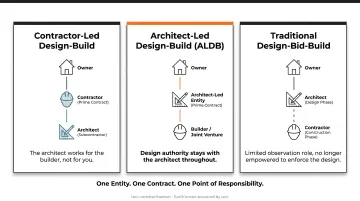
Architect-led design-build establishes a different accountability structure from the first day of design through the final day of construction.
Key Advantages of Architect-Led Design-Build
The advantages below are grounded in outcomes homeowners actually experience: cost, quality, schedule, and how well the finished home performs.
Single Point of Accountability
In architect-led design-build, one coordinated team — led by the architect — is responsible for both the design and the construction outcome. The traditional dynamic, where architects and contractors blame each other when problems arise, doesn't exist because there's no seam between the two.
The architect is present during construction to answer questions, review work, and protect design intent. Decisions made on-site reflect the design — not a contractor's best guess.
Most construction problems don't come from a single catastrophic decision. They come from accumulated small deviations: a material substitution here, a missed specification detail there. These compound when no one with design authority is in the room. Architect-led design-build closes that loop.
For homeowners investing in high-performance or resilient homes, this matters beyond aesthetics. A deviation from the structural or envelope specification goes beyond cosmetics. It can undermine the home's performance in a fire, flood, or earthquake event.
When this matters most: Projects with complex technical requirements, high-risk site conditions, or performance specifications that depend on precise execution — including homes engineered to meet WUI fire standards under California Building Code Chapter 7A.
Budget Alignment That Starts on Day One
In architect-led design-build, budget conversations happen at the beginning of the design phase. The home is designed around what the budget can actually deliver, not designed first and cut down when bids come back too high.
Instead of completing a full drawing set and then discovering the scope exceeds the budget at bid, the architect and client align cost to design intent continuously, with construction input informing decisions as design evolves.
Budget misalignment discovered at bid is one of the most common and costly problems in traditional delivery. It triggers redesign fees, delays, and scope reductions that compromise the original vision. Research from the Construction Industry Institute and Penn State found that design-build delivers 6.1% lower unit cost and 33.5% faster delivery than design-bid-build — metrics that reflect what integrated coordination actually produces.
For post-wildfire rebuild clients with fixed insurance settlements, this is a material advantage. When your budget ceiling is set by an insurance payout, knowing costs are tracked in real time rather than revealed at bid changes how confidently you can plan.
When this matters most: High-investment custom homes, post-disaster rebuilds with fixed insurance proceeds, and projects where performance upgrades require precise cost management from the start.
Integrated System Performance
Architect-led design-build allows structure, envelope, and mechanical/electrical/plumbing systems to be designed as a coordinated whole. When different parties handle these systems in sequence, with no shared responsibility for how they perform together, gaps are inevitable.
The architect makes decisions about structural systems, building envelope, and interior systems together, with input from specialists and product manufacturers early enough to matter — before field conditions lock in the options.
For a home to perform reliably over decades, especially under fire, flood, or seismic stress, these systems need to work together. When design and construction are fragmented, that coordination is the first thing lost.
Earth'smart powered by tect addresses this through the earth'smart powered by tectApp™ community of 70+ building product manufacturers, which connects projects to direct expertise from the companies behind the home's actual materials and systems — at the design stage, not after the fact. For Pacific Palisades rebuilds, this means fire-resistive exterior wall systems, integrated suppression strategies, and coordinated mechanical systems are decided together, informed by the manufacturers who make them.
DOE Building America research has consistently shown that integrated systems design produces measurably better performance outcomes in residential construction.
Integrated decisions made at the design stage reduce maintenance costs, insurance exposure, and the likelihood of system failure over the life of the home.
This is particularly relevant for new construction or full rebuilds in WUI fire zones, seismic regions, and flood-prone areas — where system performance isn't a preference, it's a requirement.
What Happens When the Architect Isn't in the Lead
When design and construction are separated — or when the builder leads — the outcomes follow a predictable pattern.
Design intent degrades through construction. Small substitutions compound into meaningful departures from the original specification. No one with authority over the design is present to catch it, because the architect's role ended with the drawings.
The failure patterns that emerge:
- Late budget misalignment — discovered at bid, triggering redesign costs and scope cuts that compromise the original vision
- Permitting surprises — zoning and code issues that could have been resolved in design instead surface during construction and cause delays
- System conflicts — structure, envelope, and MEP decisions made independently by different trades create coordination gaps and performance failures
- Reactive field decisions — on-site problem-solving by people with no accountability for the design outcome
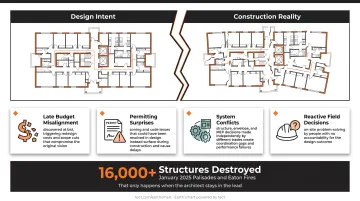
These aren't unique failures of any particular project. They're structural outcomes of fragmented delivery.
For homeowners in high-risk areas, the stakes of fragmented delivery go beyond cost overruns. The January 2025 Palisades and Eaton fires destroyed more than 16,000 structures across Southern California.
Homes that survived did so because the right decisions were made at the design stage and executed without deviation during construction. That only happens when the architect stays in the lead.
The Architect-Led Design-Build Process, Phase by Phase
Understanding each phase helps homeowners evaluate whether a team is genuinely practicing architect-led design-build — or simply using the label.
Discovery and Feasibility
The process begins before any design decisions are made. Site conditions, applicable regulations (zoning, WUI fire codes, Chapter 7A requirements), existing constraints, and client goals are fully investigated first. Earth'smart powered by tect's Earth'smart™ approach includes permit strategy from this earliest stage — which means code compliance and regulatory requirements are understood before they can become construction surprises.
Integrated Design with Early Construction Input
Design develops with builders and specialists engaged from the start. Structural options, envelope strategies, and system choices are evaluated alongside spatial decisions. The design stays buildable and cost-aligned as it evolves, so what looks right on paper can actually be built in the field.
System Coordination and Product Selection
In a high-performance home, material and system selection is a design-phase decision, not a finishing-phase task. Earth'smart powered by tect coordinates structure, envelope, and MEP to function as an integrated system, with earth'smart powered by tectApp™ community input brought in early enough to shape — not react to — the design.
Permitting and Documentation
The architect leads permitting with full knowledge of the design intent and site constraints. For WUI projects in Pacific Palisades and surrounding high-risk areas, this means:
- Fire code compliance is addressed during design, not discovered mid-construction
- Chapter 7A requirements are built into documentation from the start
- Permit strategy aligns with the regulatory environment specific to each site
Construction with Continued Architectural Oversight
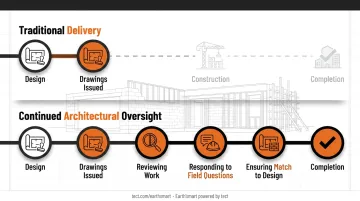
In architect-led design-build, the architect remains actively engaged through the build — reviewing work, responding to field questions, and ensuring what is constructed matches what was designed. Traditional delivery ends the architect's authority when drawings are issued. Here, that oversight continues through completion.
Is Architect-Led Design-Build Right for Your Rebuild?
Architect-led design-build delivers the most value when design quality, system performance, and long-term durability are priorities — not just speed or lowest initial cost.
The profile of projects where this model makes the most meaningful difference:
- Rebuilds in WUI fire zones, seismic regions, or flood-prone areas
- Custom homes where performance specifications are non-negotiable
- Projects with fixed budgets (insurance settlements) requiring real-time cost alignment
- Homeowners who want clear accountability throughout — not just a finished product
Earth'smart powered by tect's goal for every project is a permanent upgrade: a 100+ year home built to perform across structure, systems, and envelope, designed and delivered by one aligned team from concept through construction. "Build Once. Build Forward." means making decisions correctly the first time — with the right expertise involved early — so the home performs for generations.
Frequently Asked Questions
How is architect-led design-build different from regular design-build?
In regular (contractor-led) design-build, the builder controls the process and design decisions are shaped by construction efficiency. In architect-led design-build, the licensed architect holds the prime relationship with the owner and leads throughout — protecting design intent and performance standards from concept through construction.
Does architect-led design-build cost more than traditional delivery?
Upfront coordination costs are offset by fewer change orders, less redesign, and tighter budget alignment from the start. For performance-driven or resilient homes, correcting system decisions in the field or after occupancy costs far more than any fee savings from a lower-coordination delivery model.
What happens to design intent once construction starts?
The architect remains engaged during construction: reviewing work, answering field questions, and ensuring on-site decisions align with the original design intent. In traditional delivery, that authority ends when the drawings are issued. In architect-led design-build, it doesn't.
How does architect-led design-build help when rebuilding after a wildfire?
Post-wildfire rebuilds require precise coordination of fire-resistive systems, envelope performance, and code compliance under California's Chapter 7A requirements. Architect-led design-build brings those decisions together before construction begins. That's when getting them right is still possible — not after a crew is already in the field.
When should the builder be brought into the process?
The team integrates construction expertise during the design phase, not after drawings are complete. Cost, constructability, and sequencing inform design decisions from the start — so they don't surface as conflicts once work has begun.
Is architect-led design-build only for large or complex projects?
The model excels on complex or high-performance projects, but its core benefits — budget alignment, design integrity, and coordinated accountability — apply equally to smaller custom homes. If you're building once and building to last, the delivery model matters regardless of square footage.