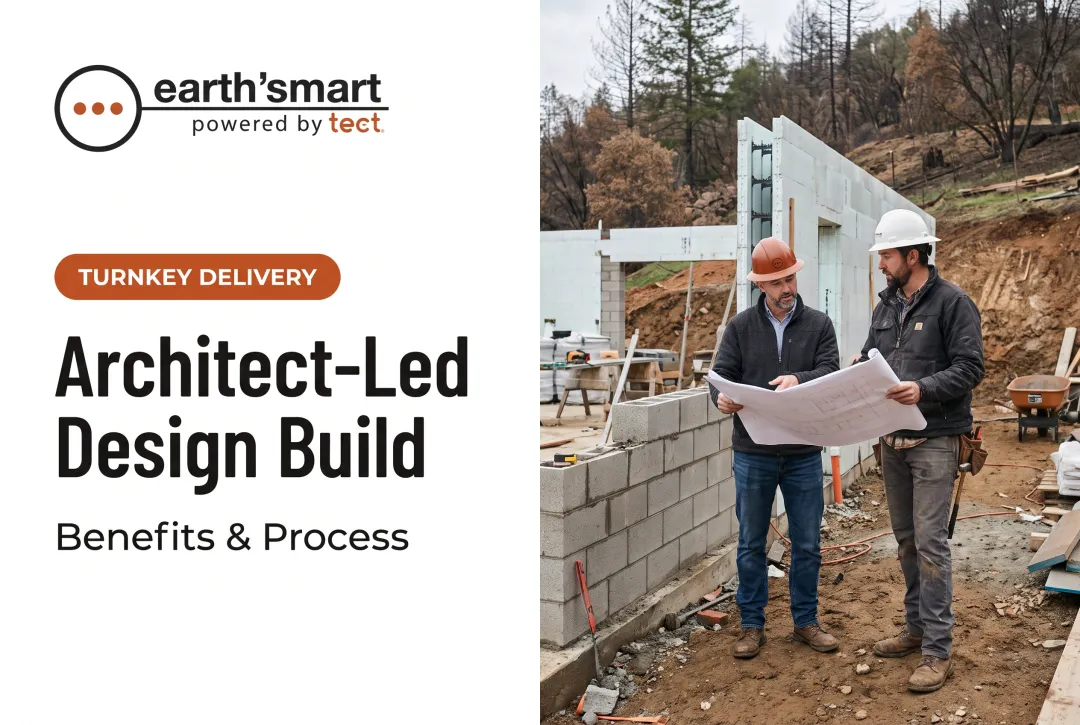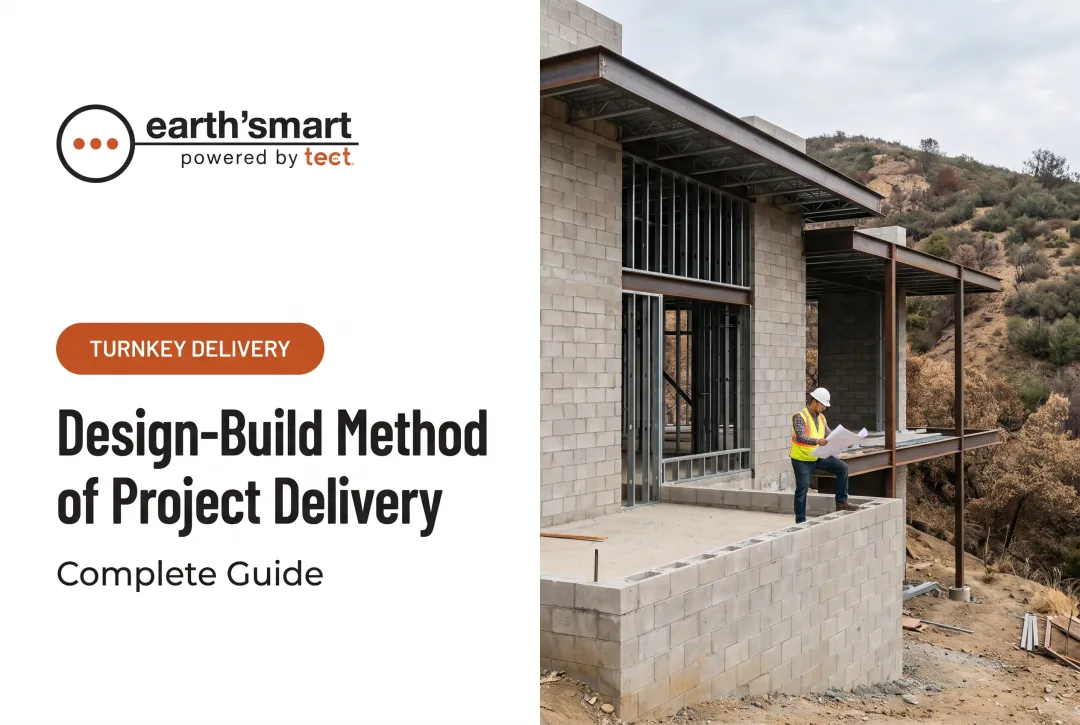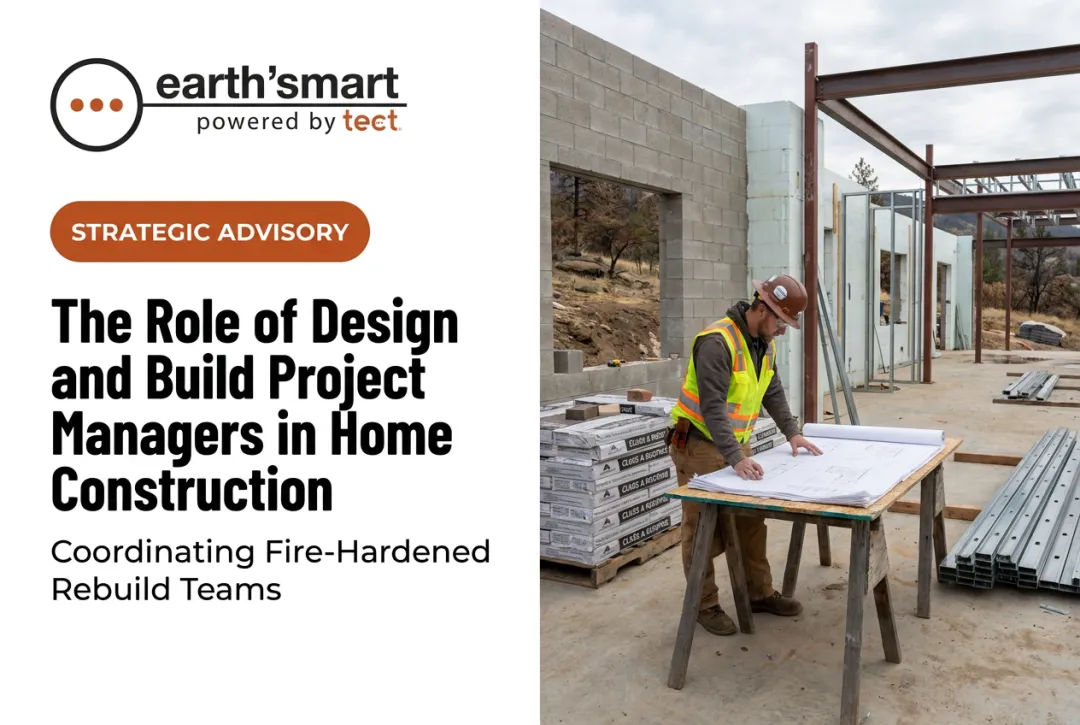
The traditional model — hire an architect, receive drawings, solicit bids from contractors — was designed for simpler projects. It creates a structural gap between the people who design and the people who build. In a full home remodel, that gap doesn't just cause friction. It causes cost overruns, schedule failures, and systems that underperform for years after move-in.
Design-build exists specifically to close that gap. When one team holds responsibility for both design and construction, the coordination failures that plague traditional remodels become internal problems to solve — not disputes for homeowners to referee.
Key Takeaways
- Design-build unifies design and construction under one team, eliminating the handoff gap where most remodel problems originate
- A single accountable team reduces change orders, budget surprises, and schedule disputes
- Modeling costs in real time during design prevents the bid-shock that derails traditionally delivered projects
- Integrating structure, envelope, and HVAC from the start produces homes that perform long after move-in
- For full home remodels with multiple interacting systems, design-build is the right delivery method — not just a convenient one
What Is Design-Build?
According to the Design-Build Institute of America, design-build's defining characteristic is simple: one contract covers both design and construction services. One team holds responsibility for both — start to finish.
How It Differs from Design-Bid-Build
The traditional design-bid-build process works like this:
- Homeowner hires an architect and pays for completed drawings
- Drawings go out to multiple contractors for competitive bids
- Homeowner selects a contractor — often someone who had no input on the design
- Construction begins, with two separate parties responsible for a project neither fully owns together
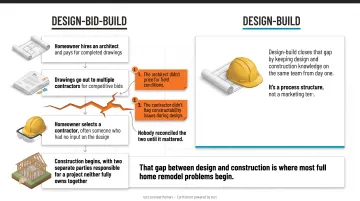
That gap between design and construction is where most full home remodel problems begin. The architect didn't price for field conditions. The contractor didn't flag constructability issues during design. Nobody reconciled the two until it mattered.
Design-build closes that gap by keeping design and construction knowledge on the same team from day one. It's a process structure, not a marketing term.
How earth'smart powered by tect Approaches This
Earth'smart powered by tect's Earth'smart™ Path A Turnkey Delivery takes the design-build concept further than most. It integrates architecture, engineering, construction, permit strategy, and direct input from the earth'smart powered by tectApp™ community of 70+ vetted building product manufacturers under one coordinated team. The goal, as earth'smart powered by tect describes it: "critical decisions are made early, correctly, and with the right expertise already at the table" — not revisited under cost pressure mid-construction.
Key Advantages of Design-Build for Full Home Remodels
The advantages below aren't unique to design-build in theory — they're amplified specifically in full home remodels, where the number of systems and trade interactions is high enough that coordination failures become expensive fast.
Single Point of Accountability
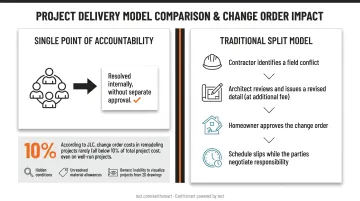
In a design-build arrangement, one team owns both the design intent and the construction execution. When something needs to change in the field — a structural detail, a mechanical rough-in location, a material substitution — the team resolves it internally.
Under the traditional split model, that same change triggers a different sequence:
- Contractor identifies a field conflict
- Architect reviews and issues a revised detail (at additional fee)
- Homeowner approves the change order
- Schedule slips while the parties negotiate responsibility
According to JLC, change order costs in remodeling projects are rarely below 10% of total project cost — and that benchmark exists even on well-run projects. Common triggers include hidden conditions, unresolved material allowances, and owners' inability to visualize projects from 2D drawings. Each of these is a coordination problem, and coordination problems compound when design and construction are separate contracts.
When accountability is unified, the homeowner stops being the default project manager navigating between siloed professionals. That shift matters most on full home remodels where structural, electrical, plumbing, HVAC, and finish trades are all running simultaneously.
Budget Certainty and Scope Control
One of the most common failure modes in a traditionally delivered remodel: a budget that held during design and collapsed during bid. The architect made decisions without real-time cost visibility. The homeowner approved drawings without knowing what they'd actually cost to build. The contractor submitted a bid three months later that bore no resemblance to the original estimate.
Design-build prevents this because cost knowledge lives inside the same team making design decisions. When a layout change or specification upgrade will break the budget, the team knows before it gets committed to permitted drawings.
Houzz's 2025 renovation research found that 37% of renovation projects went over budget, with only 35% spending what they planned. That's a majority of projects missing their financial targets — in an environment where homeowners are increasingly informed and engaged.
Full home remodels carry the highest budget exposure when they include:
- Structural modifications (beam replacements, shear wall additions, foundation work)
- System replacements running simultaneously (electrical panel, HVAC, plumbing reroute)
- Finish selections being made alongside active construction
That combination describes most full home remodels. Design-build doesn't guarantee a fixed number, but it does ensure that cost implications are visible when decisions are still reversible — not after permits are pulled and crews are on-site.
Integrated System Performance
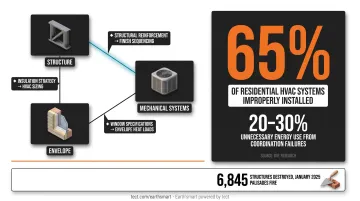
In a full home remodel, the structure, envelope, and mechanical systems aren't independent. They interact constantly. The insulation strategy affects HVAC sizing. Window specifications affect envelope heat loads, and structural reinforcement affects finish sequencing. Getting these interactions right requires the people designing them to be in active conversation with the people building them throughout the project.
DOE research found that more than 65% of residential HVAC systems were improperly installed, causing 20–30% unnecessary energy use. That's not a product quality problem. It's a coordination problem — systems sized and installed without integrated understanding of the envelope they serve.
Design-build keeps all system decisions on the same team's agenda simultaneously, so those interactions get resolved in design rather than discovered during construction.
Earth'smart powered by tect takes this further through the earth'smart powered by tectApp™ manufacturer community. Rather than specifying products from data sheets late in design, earth'smart powered by tect brings the manufacturers behind fire-resistive assemblies, HVAC equipment, roofing systems, and suppression infrastructure into the project at concept stage. The result: specifications that reflect actual installation requirements and real-world system compatibility, not assumptions that surface after permits are pulled.
This integration is especially critical for homeowners in WUI zones or rebuilding after wildfire, where uncoordinated systems create consequences beyond comfort : structural safety, insurability, and long-term code compliance. For those rebuilding in areas like Pacific Palisades — where the January 2025 Palisades Fire destroyed 6,845 structures — getting systems right the first time isn't optional.
What Happens When Design-Build Is Missing
The failure modes in a traditionally delivered full home remodel follow a predictable pattern:
- Bid-stage surprises: Drawings arrive at bid that reflect design intent but not field conditions, generating change orders before construction meaningfully begins
- Responsibility disputes: Architect and contractor disagree on who missed a coordination point; homeowner absorbs the cost or delay while they negotiate
- System incompatibilities: Mechanical, structural, and envelope decisions made by separate parties with no shared accountability surface as problems during construction — or after move-in
- Late-stage redesign costs: Budget misalignments discovered after permits are issued leave no cost-effective path back to the drawing board
On a single-room renovation, these failures are manageable. On a full home remodel — where every trade is active and every system decision affects the others — they compound.
A structural change affects the MEP rough-in schedule. A finish delay triggers a subcontractor conflict. A late product substitution requires a permit revision. One coordination gap becomes three before anyone identifies the source.
How to Get the Most Value from Design-Build
Design-build delivers its full value when the homeowner engages the team before decisions are locked — specifically before layout concepts, system specifications, or permit drawings have been developed independently.
Three points in the process determine how much of that value you actually capture:
Engage before permits are filed. The coordination benefit is highest when design and cost decisions are still fluid. Bringing in a design-build firm after permit drawings are complete narrows what they can improve.
Share the real budget upfront. Design-build teams can make genuine trade-offs during design — but only if they know the actual constraint. Withholding the number forces assumptions that rarely survive contact with bids.
Lean on manufacturer relationships. Outcomes improve when product recommendations reflect real availability, performance data, and installation requirements — not catalog specs. Earth'smart powered by tect's earth'smart powered by tectApp™ manufacturer community is engaged for exactly this reason: to put the right product expertise in the room before decisions are locked, not added after the fact.
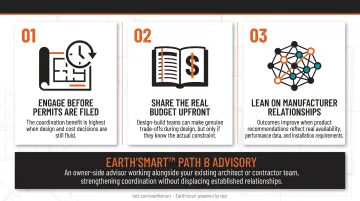
Not every homeowner starts with a blank slate. For those who already have an architect or contractor engaged, earth'smart powered by tect's Earth'smart™ Path B Advisory positions earth'smart powered by tect as an owner-side advisor working alongside the existing team — strengthening coordination without displacing established relationships.
Conclusion
Full home remodels demand coordination that the traditional split model wasn't built to provide. Design-build addresses this directly: unified accountability removes the finger-pointing, real-time cost modeling prevents budget surprises, and integrated system design produces homes that perform the way they were intended.
These three advantages compound each other. Unified accountability makes budget conversations more honest. Budget transparency makes system decisions more grounded. Integrated systems make accountability cleaner because everyone on the team understands what each decision costs and how it affects everything adjacent.
For homeowners pursuing a permanent upgrade, the delivery method is inseparable from the design. A home built through a fully aligned team — from concept through construction — is simply a different product than one assembled through disconnected handoffs. That difference shows up in performance, durability, and the absence of problems that weren't anticipated because no one owned the whole picture.
Frequently Asked Questions
What is the difference between design-build and the traditional design-bid-build process?
In design-bid-build, you contract separately with an architect and then a contractor, creating a handoff gap where coordination failures and cost surprises most often occur. In design-build, one team holds both design and construction responsibility under a single contract, eliminating the gap where disputes over ownership of a problem tend to surface.
Is design-build more expensive than hiring a separate architect and contractor?
The upfront structure can look similar in cost, but design-build typically reduces total project cost by catching budget misalignments during design rather than after bids are returned. Preventing even a fraction of the change orders that commonly run 10%+ of project cost on traditionally delivered remodels offsets the coordination premium quickly.
How far will $100K go in remodeling?
It depends on scope. A major kitchen or bathroom remodel can consume most of that budget on its own. For whole-house work, costs typically range from $15–$60 per square foot for standard finishes and $150+ per square foot for high-end or performance-driven scopes — making $100K a meaningful contribution to one room, not a full-home solution.
At what point in my project should I engage a design-build firm?
Engage before any layout concepts, permit drawings, or system specifications have been developed independently. The coordination value of design-build is highest when design and cost decisions are still fluid enough to make real trade-offs.
Does design-build work for projects that involve resilience upgrades, not just aesthetics?
Design-build is particularly well-suited for performance-driven remodels covering structural reinforcement, envelope upgrades, and fire and flood resilience, because it allows structure, systems, and materials to be designed as an integrated whole. Specifying these systems independently and in sequence is exactly how coordination gaps that affect safety and insurability form.
What should I look for when choosing a design-build firm for a full home remodel?
Look for demonstrated experience with full-home scope (not just additions or single rooms), transparent cost modeling from early design, and established relationships with trade partners and product manufacturers that support informed early-stage specification decisions. In WUI or high-risk fire zones, also evaluate whether the firm understands performance documentation requirements that insurers and underwriters actually use.