The design-build project manager exists to prevent exactly this. Not by adding another layer of oversight, but by holding design intent and construction execution together under one accountable role — from concept through final handoff.
This article is specifically about that role. Not the generic site supervisor who shows up after drawings are stamped and manages the schedule from there, but the PM who is embedded from the start and responsible for the full arc of the project. We'll cover what a design-build PM actually does, how the role differs from traditional project management, why pre-construction involvement is where the real value is made, and how this role shapes the long-term performance of a home.
Key Takeaways
- A design-build PM manages design and construction as a single integrated process, with one person accountable from concept through closeout
- Core responsibilities include protecting design intent, coordinating trades, controlling costs, and acting as the homeowner's single point of contact
- Pre-construction involvement is where the highest-value decisions get made — and where most traditional models leave homeowners exposed
- In high-risk fire, flood, or seismic zones, integrated PM coordination is essential — it's what determines whether a home is built to last or simply built to code
What Is a Design-Build Project Manager in Home Construction?
A design-build project manager is accountable across both the design and construction phases. They're not brought in after the architect has drawn the plans. They're embedded from concept through completion.
That distinction matters more than it might sound. A standard site PM enters after design decisions have already been made and manages execution against a set of drawings they had no hand in developing. They work with what they're given. A design-build PM, by contrast, is part of the process that produces those drawings: ensuring from day one that what's designed is actually buildable, that systems are coordinated before they reach the field, and that the homeowner's goals survive the handoff between disciplines.
The Connective Tissue Role
In a design-build model, the PM serves as the connective tissue between:
- The architect and structural engineer
- Specialty subcontractors and their sequencing requirements
- Building product manufacturers and their installation specifications
- The homeowner and every decision that affects their budget, timeline, and outcome
This coordination role is active, not administrative. The PM must understand the drawings, the system rationale behind material selections, and the construction realities that will affect both — not just manage a calendar.
Scope of Responsibility
A design-build PM manages schedule, budget, trade sequencing, quality oversight, and communication. But the scope goes further than that checklist suggests. They're also responsible for ensuring the home's core systems (structure, building envelope, mechanical) are selected, coordinated, and installed as a unified whole, not as disconnected parts chosen under deadline pressure.
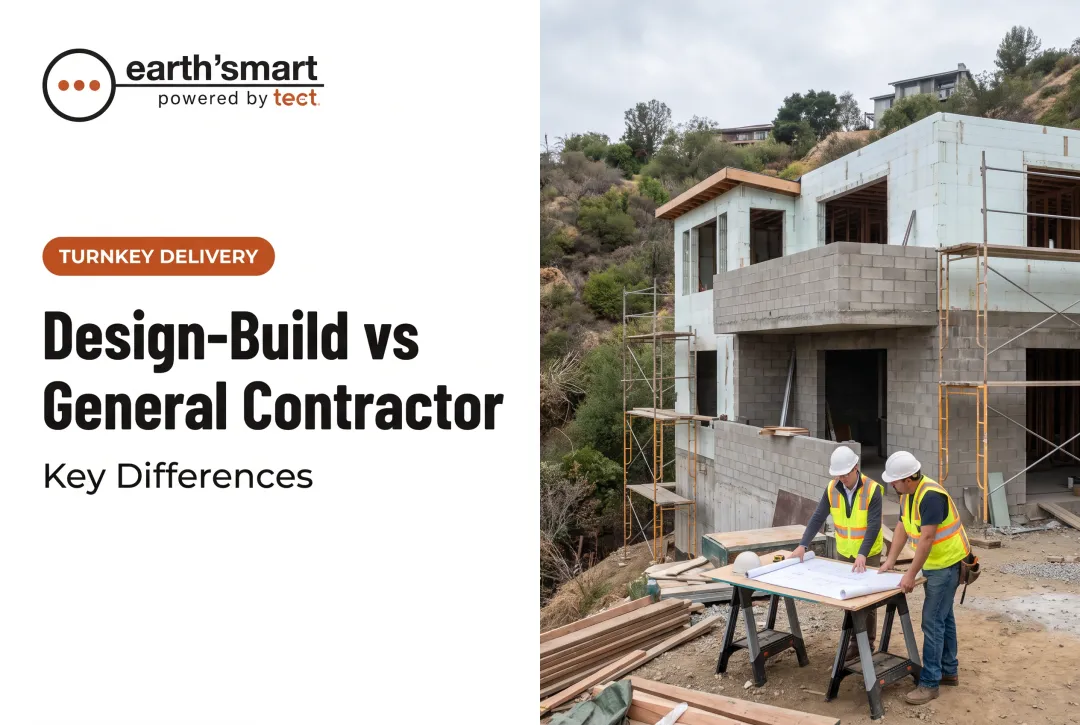
This is where the design-build PM differs from a general contractor. A GC typically enters after design is complete and manages construction execution within that framework. The PM's loyalty is to the project outcome and the homeowner's goals, not to a markup model built around subcontractor relationships.
Not all design-build PMs operate at the same level. The quality of this role depends on how early the PM is involved and whether they bring genuine cross-disciplinary expertise across both design and construction. Early involvement without that expertise — or expertise without early access — produces the same coordination failures the role is meant to prevent. For homeowners navigating complex builds in high-risk areas, that gap has real consequences.
Design-Build PM vs. Traditional Project Management: Key Differences
The Traditional Fragmented Model
In a traditional delivery model, a homeowner hires an architect, then separately hires a contractor — sometimes also bringing in a third-party PM who enters after design is complete. Each party operates within their own phase with their own priorities.
The result is a series of handoffs, and handoffs are where intent gets lost. Design decisions made without full construction input get revised in the field. Systems specified on paper don't match what's available or installable. The homeowner ends up mediating between teams who disagree about what was meant, what was promised, and who's responsible for the gap.
Earth'smart powered by tect describes this pattern directly: most homes are delivered through a fragmented process where "late decisions, disconnected teams, limited product insight, and minimum-code thinking" produce homes that look complete but underperform where it matters most.
What Integration Changes
The design-build PM model collapses these silos. One accountable role spans the full process, so decisions made during design are informed by construction reality — and construction execution is anchored to what was actually designed. The handoffs disappear. So do the gaps they create.
The performance data on integrated delivery backs this up — even though it draws from broader building-project research rather than single-family residential specifically. A 2018 study analyzing 212 U.S. building projects found consistent advantages for design-build delivery:
- 3.8% less cost growth compared to design-bid-build
- 102% faster on total delivery speed
- 78% of best-performing projects cited early team formation as a key success factor
- 78% also cited relational project culture — while worst performers pointed to poor communication and lack of delivery-system experience
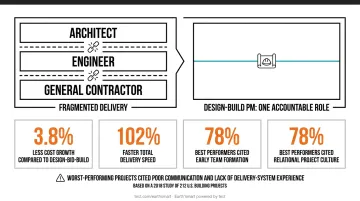
The underlying dynamic applies just as well to residential work: fragmented delivery costs more, takes longer, and fails for the same predictable reasons.
What the PM Doesn't Replace
The design-build PM doesn't eliminate architects, engineers, or specialty consultants. The role coordinates them. The PM ensures each expert is engaged at the right moment with the right information — rather than working in isolation while the project moves past them.
Core Responsibilities of a Design-Build Project Manager
Coordinating Design Intent Through Construction
One of the PM's most critical jobs is ensuring that what was decided during design — materials, system performance criteria, assembly sequences — actually survives contact with the job site.
This requires the PM to fully understand the drawings and specifications, not just the schedule. When field conditions require a deviation, the PM must recognize it, flag it, and coordinate with the architect or engineer before the work proceeds incorrectly. That on-site interpretation role requires real construction experience — not just administrative ability, but the judgment to know when a field condition changes the design outcome.
Key situations where this judgment is tested:
- Substituted materials that look equivalent but perform differently under load or exposure
- Field-discovered conditions (soil, existing structure, utility conflicts) that require design response
- Sequencing pressure that pushes trades to proceed before prior work is ready
Managing Trades, Subcontractors, and Sequencing
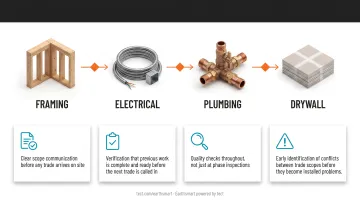
A home build involves dozens of specialized trades that must work in a precise sequence. Overlapping trades, stalled phases, or out-of-order work are among the most consistent drivers of cost overruns and quality failures.
Proactive subcontractor management looks like this:
- Clear scope communication before any trade arrives on site
- Verification that previous work is complete and ready before the next trade is called in
- Quality checks throughout — not just at phase inspections
- Early identification of conflicts between trade scopes before they become installed problems
Budget Oversight and Cost Transparency
Trade sequencing and cost control are inseparable. The PM tracks spending against the approved budget throughout construction — and that means anticipating what's coming, not just recording what's been spent.
NAHB's 2024 construction cost survey found construction costs represent 64.4% of the average new-home sales price — up from 60.8% in 2022. In that environment, cost surprises aren't minor inconveniences. The PM's role in product selection and specification review directly affects outcomes: choosing systems with appropriate lead times, understanding installation requirements before they hit the field, and preventing expensive last-minute substitutions.
Homeowner Communication and Decision Facilitation
The PM is the homeowner's primary point of contact — and that means more than providing updates. It means preparing homeowners for upcoming decisions before those decisions become urgent or expensive to change.
A strong design-build PM doesn't wait for problems to surface before communicating them. They anticipate decision points, bring the homeowner in early, and ensure that choices are made with full information rather than under construction pressure.
Why Pre-Construction Involvement Changes Everything
The highest-leverage phase for a design-build PM isn't active construction. It's the period before a single shovel hits the ground.
Decisions about structural systems, building envelope materials, mechanical systems, and site conditions made during pre-construction set the quality ceiling for the entire project. Made late — or made in isolation — these decisions become expensive and difficult to correct once work is underway.
The AIA's Integrated Project Delivery guide frames this clearly through the MacLeamy Curve: the ability to influence cost and performance is highest early in a project, while the cost of making changes rises sharply as the project moves toward and through construction. Front-loading design effort improves cost control, reduces rework risk, and produces better-coordinated construction documents.
What Pre-Construction PM Engagement Looks Like
In practice, pre-construction involvement means:
- Reviewing design for constructability — identifying conditions that will cause problems before they're built in
- Confirming system availability and compatibility — specified systems need to actually exist, be obtainable, and work together
- Coordinating manufacturer input — getting technical guidance from the companies behind critical building products before those selections are locked in
- Establishing a realistic budget and schedule — before commitments are made, not after
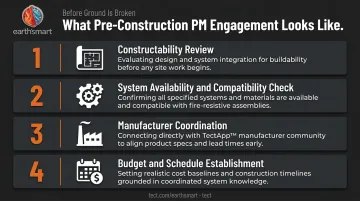
This is where earth'smart powered by tect's model creates meaningful separation from standard residential delivery. Through the earth'smart powered by tectApp™ community of 70+ building product manufacturers, homeowners get direct technical input on fire-resistive assemblies, structural systems, mechanical integration, and material compatibility — exactly when those inputs can still shape the project.
Most residential builds never see this level of early coordination. It's the kind of access typically reserved for complex commercial projects.
The Cost of Deferred Decisions
When systems are chosen under construction pressure rather than during design, the outcome is typically mismatched components, last-minute substitutions, and performance gaps that can persist for the life of the home. Research from the ASCE Journal of Construction Engineering and Management found that one in eight houses reported construction defects, with rectification costs averaging 4% of contract value. Most of those defects trace back to decisions that were deferred, skipped, or made without the right technical input during early project phases.
Engaging a PM before design is locked in is what separates projects that perform as intended from those that spend years correcting what should have been right from the start.
How a Design-Build PM Supports Long-Term Home Performance
In standard home construction, project success is defined as on time and on budget. For homes built in high-risk fire, flood, or seismic zones — or for any homeowner who expects their home to perform well for decades — that definition isn't sufficient.
The design-build PM's coordination role directly determines whether a home achieves long-term performance, not just completion.
System Integration and Why It Matters
The DOE describes a home as an integrated energy system whose components work interdependently. A whole-house approach that accounts for site, climate, and occupants can reduce utility and maintenance costs, improve comfort, reduce noise, support healthier indoor air quality, and improve durability.
Getting there requires structural elements, building envelope, and mechanical systems to be designed, specified, and installed as a coordinated whole. When each system is decided independently — or handed off between disconnected teams — the gaps between them become performance liabilities that compound over time.
The PM's oversight ensures those systems are coordinated through design and verified through construction. That's the delivery mechanism for actual long-term performance, not just checklist compliance at handoff.
The WUI Context
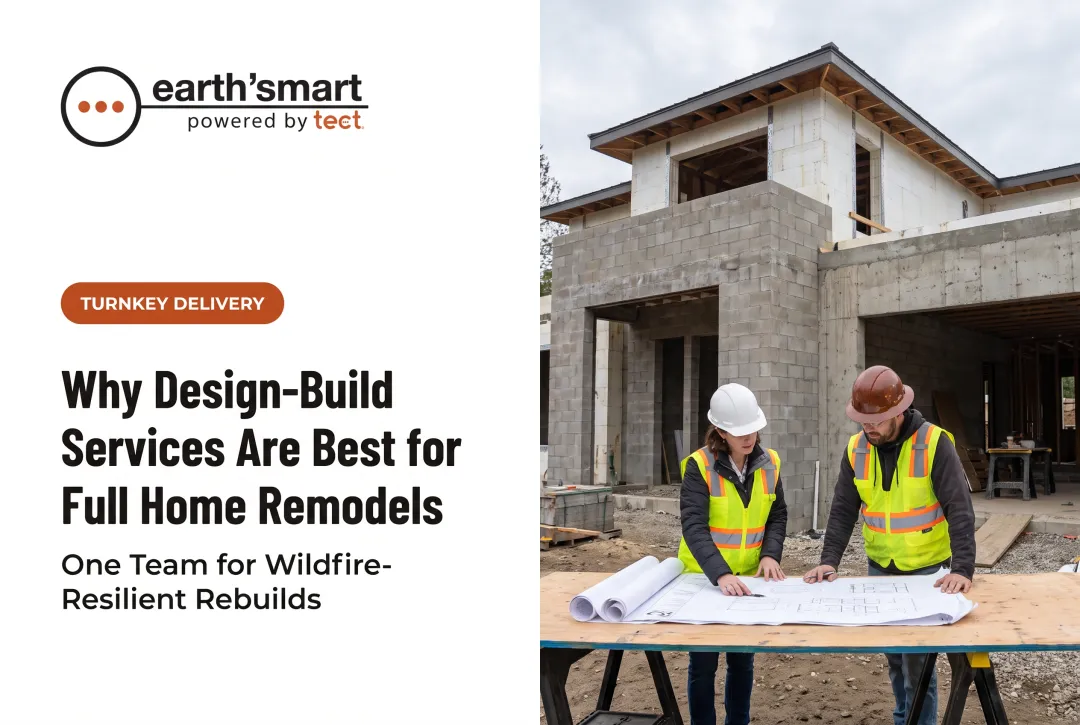
For homeowners in Pacific Palisades and similar Wildland-Urban Interface areas rebuilding after wildfire, the stakes of getting these systems right are not abstract. NIST Technical Note 2205 identified 16 different ignition pathways in the Camp Fire case study — and 40 distinct vulnerability points across roofs, gutters, windows, doors, and vents that ember hardening must address.
Meeting California Building Code Chapter 7A requirements, IBHS Wildfire Prepared Home standards, and the technical requirements for fire-resistive assemblies, noncombustible materials, and integrated suppression systems requires more than compliance checking. Each decision must be made with full understanding of how it interacts with everything else — and a PM coordinating that process from the start is what makes that possible.
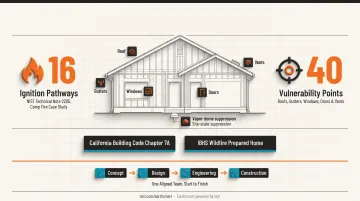
Earth'smart powered by tect's Pacific Palisades rebuilds bring together fire-resistive wall systems, noncombustible assemblies, site-scale suppression, and coordinated mechanical and structural systems under a single aligned team. That kind of integration — PM-led, from concept through construction — is what separates a home that's finished from one that performs for 100+ years.
Frequently Asked Questions
What is a design-build project manager?
A design-build project manager oversees both the design and construction phases as a single, integrated process, serving as the homeowner's primary point of accountability from the first concept meeting through final handoff. Unlike a site supervisor, they're responsible for ensuring design intent is actually reflected in what gets built.
What's the difference between a design-build project manager and a general contractor?
A general contractor typically enters after design is complete and manages construction execution from there. A design-build PM is involved from the design phase and maintains accountability for how the finished home reflects every design decision made along the way. There's no handoff gap between the two roles.
When should a project manager be involved in a home build?
As early as possible, ideally before design begins. Pre-construction is when structural systems, site conditions, and budget parameters are still easy to influence. Once those decisions are locked in, the PM can manage around them but can't undo them.
Do I need a project manager if I already have an architect?
Architects design and protect design intent, but they don't manage trade coordination, scheduling, or budget oversight during construction. A design-build PM handles execution. The two roles are complementary, not redundant.
How does a design-build PM protect quality during construction?
Through regular site walkthroughs, direct comparison of work against drawings and specifications, early identification of deviations, and coordination of corrections before they compound. Consistent on-site oversight is what separates managed quality from hoped-for quality.
What does a design-build PM cost?
Fees vary by project scope and delivery model: some are percentage-based, others are fixed-fee. The relevant question is what the coordination buys: avoided rework, better system integration, fewer late-stage change orders, and a home that actually performs as designed.